
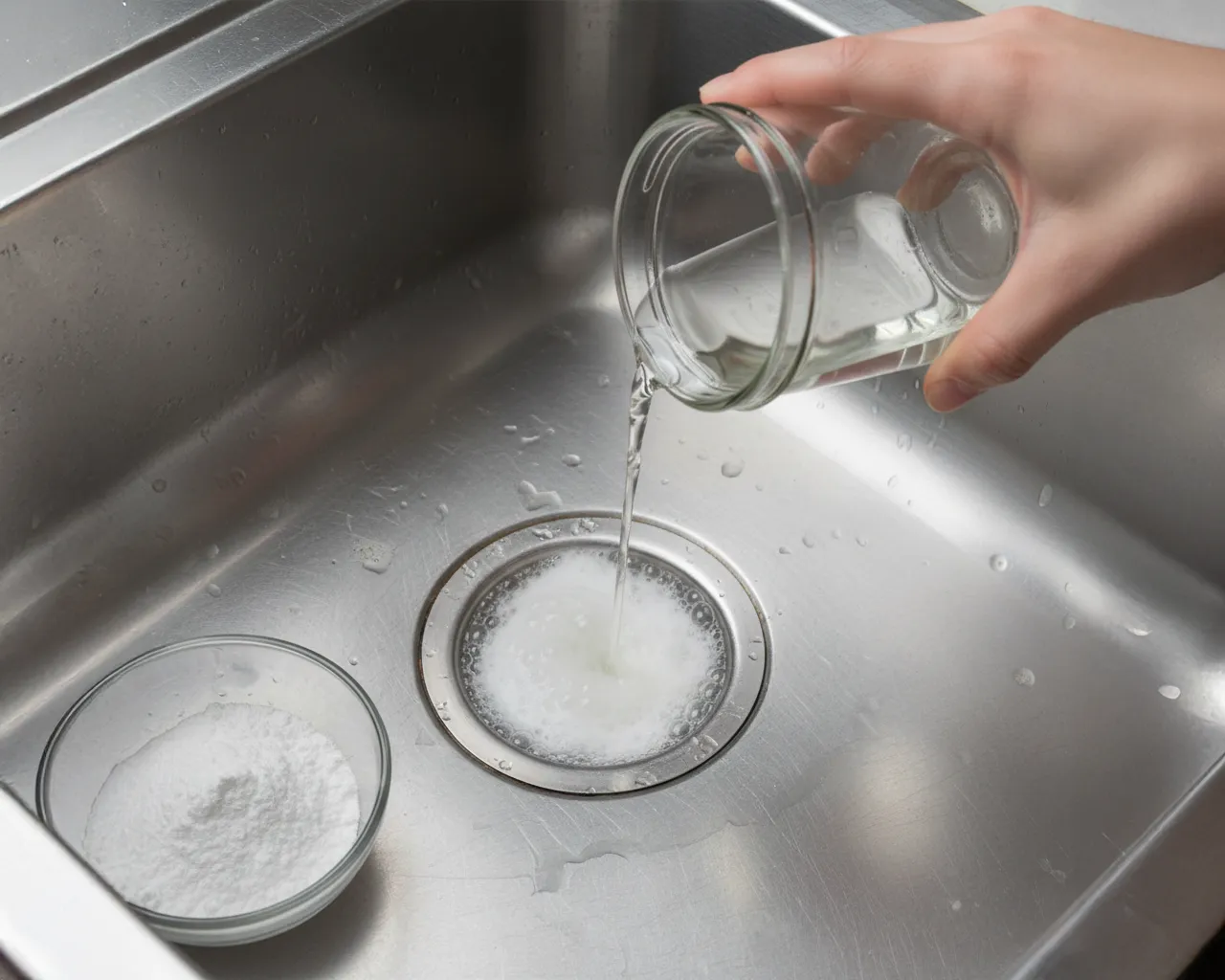
A clogged or foul-smelling drain can quickly bring everyday life to a standstill. Before you get frustrated or resort to aggressive chemicals, there are simple home remedies for quick first aid. We show you how to quickly and environmentally friendly clear minor blockages yourself, and when you must call a specialist to prevent costly consequential damage to your pipes from occurring in the first place.
Drain Cleaning Explained Briefly
- First Aid: The most effective home remedies are the combination of baking soda/baking powder and vinegar or hot water to dissolve grease and minor blockages.
- Caution is Best: Avoid aggressive, chemical cleaners, as they can attack the pipes and often only make the problem worse.
- The Limit: If the water drains very slowly or not at all even after several attempts, professional help from an expert is required.
- Prevention: Use drain strainers and do not dispose of grease and food scraps down the drain to prevent blockages.
How can I clean a clogged drain?
For minor blockages, you can often achieve initial success with simple home remedies (like baking soda/baking powder, vinegar, and hot water) or mechanical aids (plunger, drain snake). We fundamentally advise against chemical cleaners, as these can damage pipes.
Overview of Drain Cleaning Methods
If the drain is running slowly, this is a clear sign of deposits. Here are the common DIY cleaning methods you can try:
- Home Remedies (Baking Soda & Vinegar): The combination of baking soda and vinegar creates a chemical reaction that dissolves organic residues and grease.
- Hot Water: Pour boiling water into the drain, as this dissolves grease very well and quickly helps with minor blockages.
- Plunger (Saugglocke): The plunger creates negative pressure that can physically dislodge minor clogs. Fill the basin with a little water and pump vigorously several times.
- Drain Snake (Abflussspirale): A manual cleaning snake can pull hair and coarser particles out of the pipe. This is particularly effective for long hair in bathroom drains.
- Cleaning the Trap (Siphon): If the clog is located directly in the trap (Siphon), it can be easily dismantled and cleaned in a few steps.
Caution: Avoid Chemical Cleaners!
We strongly advise against aggressive, chemical cleaners. They are environmentally harmful and can attack your pipes and seals, leading to costly consequential damage.
If these steps do not solve the problem or you are unsure, we are here to professionally resolve the issue and prevent greater damage.
Instructions: Cleaning a Drain in the Kitchen
The best method for drain cleaning with home remedies in the kitchen is the use of baking soda (or baking powder) and vinegar essence, as this combination can effectively dissolve deposits from grease and food scraps if the blockage is not too severe.
Step-by-Step to a Clear Drain with Baking Soda The baking soda trick is the ideal first step. It is effective for clogs consisting mainly of grease and soap residues.
- Preparation: Scoop out standing water so that the powder reaches the clog directly.
- Add Baking Soda: Pour 3 to 4 tablespoons of baking soda (or baking powder) directly into the drain.
- Add Vinegar Essence: Immediately pour about half a cup of vinegar essence (or lemon juice) in after it.
- Wait for the Reaction: It should now bubble vigorously. Let the mixture sit for 30 minutes until the bubbling subsides.
- Rinse Vigorously: Finally, pour plenty of boiling water in to flush away the dissolved dirt.
Cleaning a Drain in the Bathroom
In bathroom drains, hair is the main cause, which is why mechanical methods such as the drain snake or cleaning the trap are most effective here. You can try home remedies first against soap residues, but they are often ineffective against hair.
Procedure for Bathroom Clogs
Bathroom drains in the shower or sink usually clog due to hairballs and undissolved soap scum.
- Home Remedies: You can try the baking soda-vinegar method first to dissolve soap residues. This method often does little against hair, the main problem in the bathroom.
- Plunger: A good first choice for mechanical cleaning, as the pressure generated often clears superficial clogs. You can also use the plunger to clean a clogged toilet or shower.
- Drain Snake: A good method to pull the hairball out of the pipe. Caution: A manual cleaning snake requires some practice and dexterity to avoid damaging the pipe itself.
- Cleaning the Trap (Siphon): If the problem is persistent, the clog is often located directly in the trap (the bent pipe). Manual cleaning permanently removes the buildup. Caution: Dismantling also requires some practice to seal everything tightly afterward.
If even these targeted measures do not help, the problem lies deeper in the main drain line. Now it is time for a professional pipe cleaning.
What are the most common mistakes when cleaning a drain?
The biggest mistake is the use of aggressive chemical cleaners, as they can damage the pipe material and seals. Improper use of the plunger, compressed air cleaners, or drain snake can also push the clog deeper or damage the pipes. As a competent and reliable partner for your wastewater system, we unfortunately often see the consequences of these mistakes. You should definitely avoid these two errors:
The Danger of Chemical Cleaners
We strongly advise against aggressive, chemical cleaners. When improperly used, the chemicals they contain can damage the pipe material, the seals, or even the sink.
Incorrect Use of Equipment
- Compressed Air Drain Cleaners: These cartridges from the hardware store can press the contamination deeper into the drainage system, causing a further, more severe blockage there.
- Plunger: Avoid jerky movements. That will only push the clog deeper into the drain.
- Drain Snake: Be careful and work with feel. If used incorrectly, the snake can damage the inner walls of older pipes.
Cleaning a Drain: DIY or Hire a Company?
DIY cleaning is useful for superficial clogs in the sink or shower. If the clog is deeper, the water is not draining at all, or the drain smells, it is a clear case for a professional.
DIY: The Clog is Superficial
In many cases, the blockage is only superficial – usually in the trap of the sink, washbasin, or shower. This is often noticed when the drain smells.
- The cause are hair, soap residue, food scraps, or grease.
- These contaminants can usually be removed using the discussed home remedies (baking soda/vinegar) or mechanical methods like a plunger, drain snake, or cleaning the trap.
Professional Deployment: The Clog is Deeper
You should call a professional for pipe cleaning if the blockage lies deeper, for example, in the vertical drain lines located within the wall. This is an unmistakable sign that you won't get any further with home remedies.
Signs that you need to call a professional:
- The problem keeps recurring despite your best efforts.
- The water backs up after a short time and is only draining very slowly.
- You notice an unpleasant odor that indicates a blockage in the pipe inside the wall.
The longer you wait, the greater the damage can become. With standing water or recurring problems, we recommend our professional pipe cleaning. For acute emergencies (e.g., water overflow), our 24/7 emergency pipe cleaning service is available 365 days a year.
How do I actively prevent blockages?
The best defense against clogged drains is active prevention in everyday life:
- Drain Strainers: Use strainers to catch hair, food scraps, and similar clog-causing agents.
- No Grease, No Residue: Be careful not to flush grease, food scraps, or hygiene products down the drain. Dispose of fatty sauces or marinades through the correct disposal channels.
- Hot Water Flush: Flush the drain with plenty of hot water after cooking if you suspect traces of grease.
Conclusion & Next Steps
We have shown in this blog post how to clean a clogged drain without having to call a professional right away. Simple home remedies such as baking soda, vinegar, and citric acid, which are available in every household and easy to use, were introduced. We also clearly differentiated when it makes sense to clean the drain yourself and when it is better to hire a professional. With these tips, you can avoid unpleasant odors and floods. Next Steps: If you cannot clear the drain using our tips listed above, you probably have a bigger problem with your wastewater system. Then it is time for our professional pipe cleaning.