

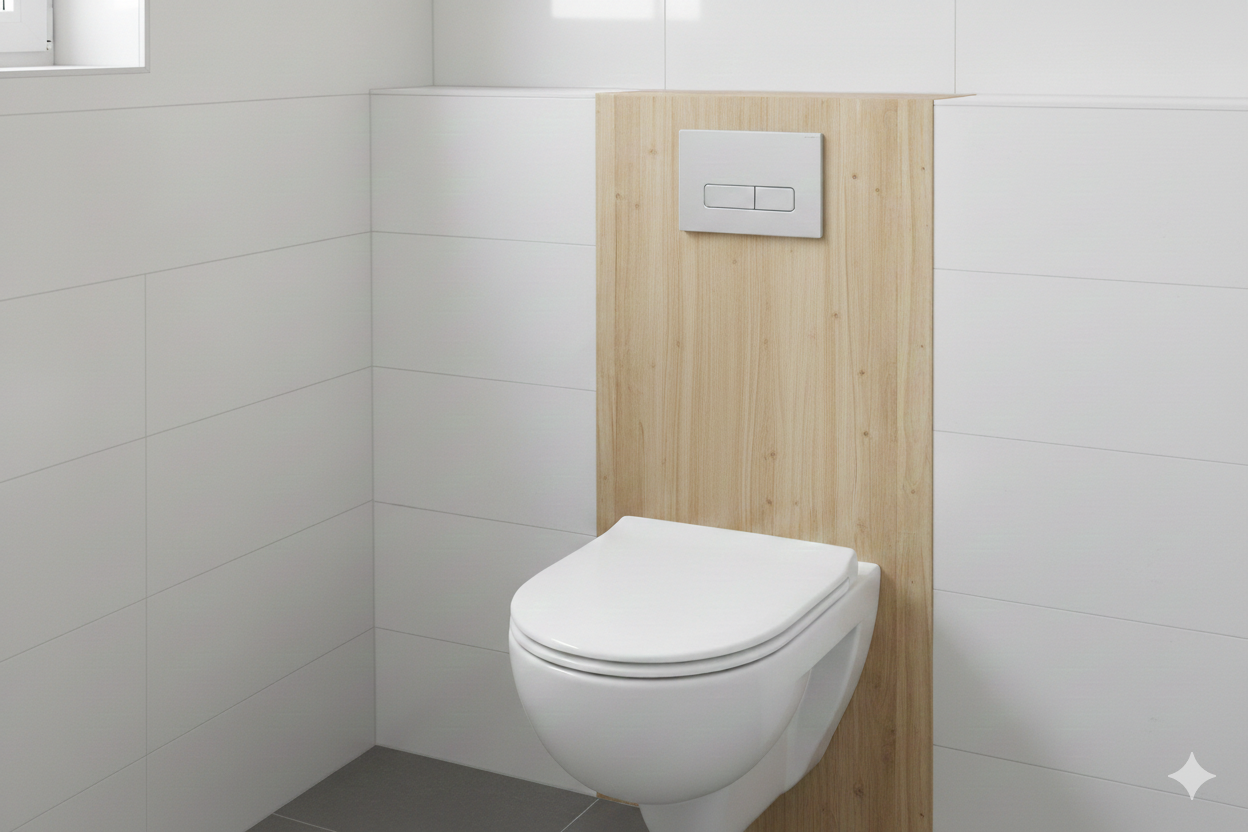
A running toilet cistern costs money and nerves. We will show you how to remove limescale deposits efficiently with home remedies.
Quietly trickling water in the toilet is often the first warning sign of limescale in the cistern. When seals and mechanisms get stuck, not only does water consumption rise, but so does the risk of costly consequential damage. In this guide, you will learn how to get your system working properly again with a few simple steps.
Descaling a Toilet Cistern at a Glance
- Regularity: Descaling every 6 to 12 months protects the seals in the long term.
- Home remedies: Citric acid and vinegar essence are inexpensive and effective descalers.
- Savings: A watertight cistern prevents hundreds of liters of water from going to waste.
- Systems: Both exposed and concealed (in-wall) cisterns can be cleaned yourself.
- Wear protection: Acting early extends the service life of the entire flush mechanism.
When Does a Toilet Cistern Need Cleaning?
Ideally, you should descale your cistern every six to twelve months. If you have very hard water or notice the first signs, such as water that keeps running or limescale marks in the bowl, it is advisable to act immediately to protect the mechanism.
Symptoms of a scaled-up cistern
Often, the problem only becomes noticeable once malfunctions occur. Watch out for the following warning signs:
- Running water: The flow of water into the toilet bowl does not stop completely after flushing.
- Sluggish mechanism: The flush button sticks or is hard to press.
- Noise: Refilling the cistern takes unusually long or causes loud hissing.
- Visible deposits: Limescale rings in the bowl or small flakes of limescale in the flush water.
Practical Tip on Water Hardness
How often you need to clean depends largely on where you live. You can either ask your local water utility about the hardness of your water or easily determine it yourself with water hardness test strips. These test strips are often available free of charge from your water supplier or cheaply at any drugstore. In regions with soft water, an annual check is often enough, while in areas with hard water, a six-monthly routine protects you from expensive repairs.
Citric Acid or Vinegar: Which Home Remedy Beats Limescale?
Citric acid is the ideal home remedy for descaling because it is gentle on materials and, unlike vinegar essence, does not attack rubber seals. Denture cleaning tablets are also excellent for regular maintenance in between.
The Big Descaler Comparison
To make your decision easier, we have compared the most common products side by side:
Citric Acid (Our Recommendation)
- Advantages: Very gentle on materials, pleasant scent and strong descaling power.
- Challenge: Must be dissolved in warm (not boiling!) water.
- Contact time: 2 to 4 hours.
Vinegar Essence (The Powerful One)
- Advantages: Inexpensive, with an extremely strong cleaning effect.
- Risk: Can make rubber seals brittle if overdosed or used frequently.
- Contact time: 1 to 2 hours.
Denture Cleaning Tablets (The Insider Tip)
- Advantages: Very easy to use, inexpensive and hygienic.
- Disadvantage: Only really effective for light to moderate limescale.
- Contact time: Ideally overnight.
Professional Cleaners (The Chemical Sledgehammer)
- Advantages: Maximum performance, often with a protective formula against new deposits.
- Criticism: More expensive to buy and environmentally questionable.
- Caution: If left to act for too long, the harsh chemical ingredients can permanently damage plastic parts and seals.
- Contact time: Always follow the instructions on the package strictly!
Why Choosing the Right Product Matters
Well-intentioned attempts at descaling with overly aggressive acids (such as hydrochloric acid) can permanently damage the sensitive components inside the cistern. Powdered citric acid offers the best balance of effectiveness and protection for your sanitary installation.
Step by Step: Descaling an Exposed Cistern
To descale a freestanding cistern, remove the lid, turn off the water and let the descaler work. Clean the removed moving parts separately in a bucket to get rid of all limescale residue.
Instructions for manual descaling
This method is suitable for all accessible standard cisterns:
- Preparation: Carefully remove the lid and close the angle valve on the water supply.
- Remove the mechanism: Take out the float and the flush valve. Make a careful note of where each part goes.
- Soak the parts: Place the removed parts in a bucket of warm water and citric acid. Depending on the amount of limescale, it is best to leave them to soak overnight.
- Clean the cistern: Pour descaler directly into the remaining water in the cistern as well. After the contact time, you can loosen stubborn residue with a brush.
- Reassembly & test: Put the cleaned parts back in, open the valve and flush several times to rinse out all acid residue.
Descaling a Concealed Cistern
To descale a built-in cistern, you first need to remove the flush plate to gain access to the service opening. Proceed with particular care so as not to damage the retaining clips of the plastic cover.
In modern bathrooms, the technology is often hidden behind tiles. Even so, maintenance is modular and easy to carry out:
- Remove the flush plate: Usually, you slide the plate slightly upwards or to the side to release it from its catch. With older models, be aware that the plastic may have become brittle.
- The photo trick: Before unscrewing the release mechanism or the frame, take a photo of the inside. This will help you put the components back in exactly the right place later.
- Shut off the water supply: Behind the plate, you will find the integrated shut-off valve. Close it and flush one last time to empty the cistern.
- Deep clean through the opening: Pour the citric acid solution directly through the service opening. Small moving parts that you can remove should be descaled separately in a container.
- Reassembly: After the contact time, reassemble everything in reverse order. Thanks to your photo, you will know exactly where the springs and levers need to go.
When should you be careful?
If, when opening the cistern, you find that components are already badly corroded or that water is escaping uncontrollably, it is advisable to call in professional help. For simply removing limescale, however, this DIY approach is the most efficient solution.
What to Do If the Toilet Still Runs After Cleaning the Cistern?
If the toilet keeps running despite thorough descaling, the cause is usually a porous seal on the siphon bell (flush valve) or a faulty fill valve. In this case, the wear parts need to be replaced completely to stop the water loss.
Finding the Fault Systematically
Once limescale has been ruled out as the cause, the following practical recommendations will help:
- Seal check: Remove the flush valve (siphon bell) again and check the large sealing ring at the bottom. If the rubber is cracked, hard or deformed, it can no longer seal properly.
- Float adjustment: Check whether the float moves freely or gets caught on the housing. Sometimes a minimal readjustment is enough for the valve to close in time again.
- Clean the fill valve: Tiny foreign particles can also collect in the fill valve. Rinse it carefully to make sure the water supply stops reliably as soon as the cistern is full.
When Descaling Is No Longer Enough
If the mechanical components show visible cracks after cleaning or the spring of the release mechanism has worn out, a replacement parts kit is the most economical solution. Replacing parts in good time saves you significantly higher costs from uncontrolled water consumption in the long run.
Preventing Limescale Deposits in the Cistern
To prevent limescale deposits in the long term, you should use cistern tablets regularly and clean at fixed intervals. This significantly extends the service life of the fittings and saves water.
How to keep your cistern clean for good
A little effort in prevention avoids costly repairs:
- Cistern tablets: Simply place these tablets in the cistern; they descale and clean with every flush.
- Cleaning interval: Depending on water hardness, schedule a check every 6 to 12 months.
FAQs: Frequently Asked Questions about Cleaning a Toilet Cistern
Answers to the most common questions about cleaning a toilet cistern.
Can you descale a cistern with denture cleaning tablets?
Yes, denture cleaning tablets are an excellent home remedy for regular cleaning in between. They are particularly gentle on materials and effectively dissolve light limescale deposits overnight.
How long does the descaler need to work in the cistern?
The contact time depends on the degree of limescale build-up. While citric acid usually needs two to four hours, for heavy encrustation it is best to leave the cleaner to work overnight.
Which home remedy is best for the seals?
Powdered citric acid is the clear winner for sanitary installations. It dissolves limescale powerfully but is much less aggressive towards rubber seals and plastic parts than highly concentrated vinegar essence.
Do I have to turn off the water for cleaning?
Yes. To safely remove and clean moving parts such as the float or the siphon bell, the water supply at the angle valve must be shut off.