
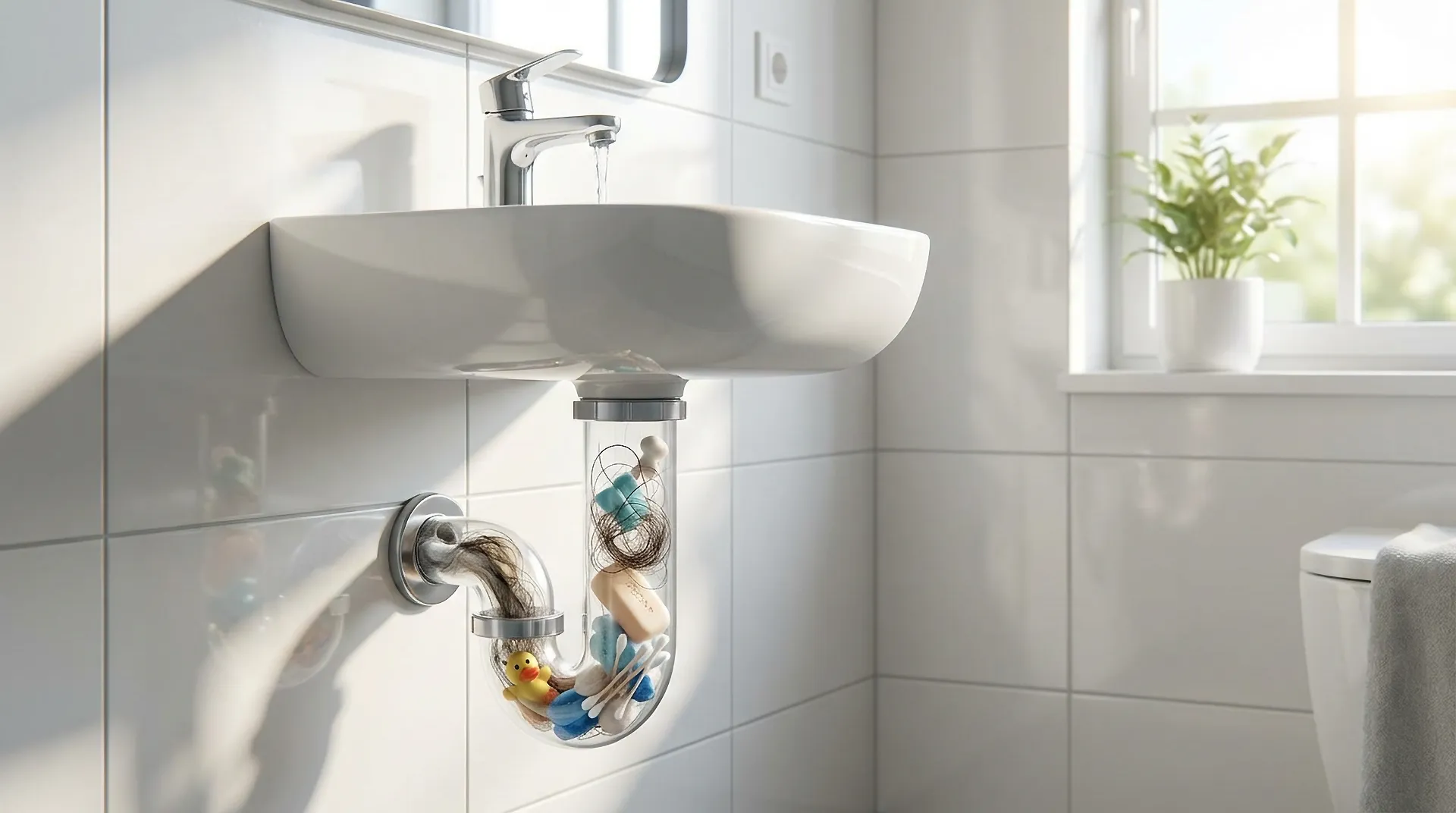
When water is standing in the sink or the drain is gurgling suspiciously, you need to act fast. A pipe blockage often builds up gradually. If you recognize the signs early, you can avoid expensive consequential damage.
In this guide, you will learn how to clear a blocked pipe yourself and why your drain pipe is blocked. We explain the most effective cleaning methods and show you when our team’s expertise is needed. Find out the difference between a minor blockage and a blocked sewer, plus the best tips for long-term prevention.
Pipe blockages at a glance
- First signs: A gurgling noise in the drain, unpleasant odors or water that drains away only very slowly.
- Common causes: Grease deposits in the kitchen, hair and soap residue in the bathroom, and hygiene products or too much paper in the toilet.
- Quick help: A combination of baking soda and vinegar for light deposits, or a plunger for physical blockages.
- Caution: Avoid aggressive chemical drain cleaners, as they can damage your pipes.
- When to call an expert: If home remedies fail, the water is not draining at all or several drains are affected at the same time, professional pipe cleaning is required.
How can you recognize a developing pipe blockage?
The problem often announces itself before the water stops draining from the sink completely. Look out for these three warning signs:
- Gurgling: A gurgling noise after the water drains away is a classic sign of air problems in the system. This often happens when deposits have already severely narrowed the pipe.
- Unpleasant odors: If your drain smells, bacteria are breaking down organic residue in the siphon. This is often the first stage of a complete blockage.
- Slow drainage: If the water takes noticeably longer than usual to drain away, the pipe is already partially blocked.
Why is the drain pipe blocked?
The reasons for a blockage depend heavily on where it occurs in the home. In most cases, it is caused by things that end up in the drain without us noticing in everyday life:
- In the kitchen: Grease and food scraps are the main cause. Grease is liquid when warm but cools down in the pipe, where it combines with other particles to form a hard mass.
- In the bathroom: Hair, soap residue and limescale often form tough clumps in showers and sinks that stop the flow.
- In the toilet: This is usually a mechanical blockage. Too much toilet paper or hygiene products quickly lead to a clogged toilet.
- Structural defects: Sometimes the cause lies deeper. Scale build-up (encrustation), root ingress or sagging pipes can permanently obstruct drainage.
What to do about a blocked pipe
Before calling in outside help, you can often deal with surface blockages yourself. We recommend a combination of gentle home remedies and mechanical solutions. These methods are particularly gentle on materials and prevent aggressive cleaning agents from attacking your pipes.
Home remedies as first aid
A proven method for light deposits is the combination of baking soda and vinegar. Put four tablespoons of baking soda into the drain and immediately pour half a cup of vinegar after it. The fizzing chemical reaction helps to dissolve grease and soap residue effectively. Leave the mixture to work for about 30 minutes and then rinse thoroughly with hot water. You can find detailed instructions in our article on cleaning drains with home remedies.
Using a plunger
The plunger is the most effective tool for loosening physical blockages. Run some water into the basin until the rubber cup is completely covered. Quickly pumping up and down creates alternating pressure that moves and loosens the blockage in the pipe. Make sure to seal the overflow with a damp cloth so that the vacuum can take full effect.
Cleaning the siphon
If the blockage is directly under the sink, cleaning the siphon by hand is often the safest option. Place a bucket under the drain and unscrew the curved section of pipe. Remove the deposits by hand or with a small brush. When reassembling, make sure that all seals are seated correctly again to avoid water damage later on.
Beware of chemical cleaners
Aggressive drain cleaners from the supermarket are often based on highly corrosive ingredients. On contact with water, they generate extreme heat, which can deform plastic pipes and make seals brittle. They also put a considerable strain on the environment and can release harmful fumes if used incorrectly. We therefore generally advise against using chemical granules.
When is DIY no longer enough for a blocked pipe?
There are situations in which home remedies and mechanical attempts reach their limits. If the water is still not draining despite your efforts, or the problem returns after a short time, the blockage is usually deeper in the system.
Signs of a deeper problem:
- Several drains affected: If the water rises in the shower while you are using the sink, the problem is usually in the central stack or the underground drain pipe.
- Bubbling in other pipes: Do you hear gurgling in the bathtub when you flush the toilet? This indicates a severe air lock because the drain pipe is blocked.
- Recurring blockages: If the drain stops working every few weeks, this points to stubborn encrustation or structural defects that cannot be solved on the surface.
In these cases, there is a serious blockage that household remedies can no longer clear. We recommend professional pipe cleaning. Only then can the blockage be located reliably and the problem solved for good.
Will my insurance cover the costs of a pipe blockage?
In many cases, a blockage is an insurance claim. In Austria, building or household insurance often covers the costs. Check your individual policy.
Our all-round service: On request, we will be happy to handle all direct communication and processing with your insurer or property management company. This saves you time and paperwork.
How can you prevent a pipe blockage?
The best way to avoid blocked pipes is consistent prevention in everyday life. A few simple habits can minimize the risk of deposits and extend the service life of your drain pipes.
- Use drain strainers: Use fine strainers in the kitchen and bathroom. They reliably catch hair, lint and food scraps before they can get into the pipe system.
- Dispose of grease correctly: Never pour used cooking oil or frying fat down the drain. Grease hardens as it cools in the pipe and forms the basis for severe blockages. Dispose of grease in the household waste instead.
- Rinse with hot water regularly: Flush your drains with plenty of hot water once a week. This helps to loosen fresh grease deposits and soap residue before they harden.
- No foreign objects in the toilet: Never dispose of wet wipes, hygiene products, cat litter or food scraps in the toilet. These items do not dissolve in water and are the most common cause of a blocked sewer.
With these simple measures, you significantly reduce the risk of a blocked drain pipe and save yourself unnecessary repair costs in the long run.
Conclusion
In this blog post, we have shown how to deal effectively with a pipe blockage and which measures really help when a drain is blocked. We explained the most common causes in the kitchen, bathroom and toilet and showed why your drain pipe may be blocked. Home remedies such as baking soda and vinegar offer gentle first aid, while mechanical cleaning with a plunger or cleaning the siphon is the next logical step for physical blockages. Above all, we have made clear which aggressive methods you should definitely avoid to prevent expensive damage to your plumbing. Regular prevention with drain strainers and proper grease disposal remains the best protection against a blocked sewer. Contact us if the problem lies deeper or the blockage persists despite your efforts.
In short: This blog post provides valuable information to help you clear a pipe blockage quickly and keep your pipes free-flowing in the long term.