
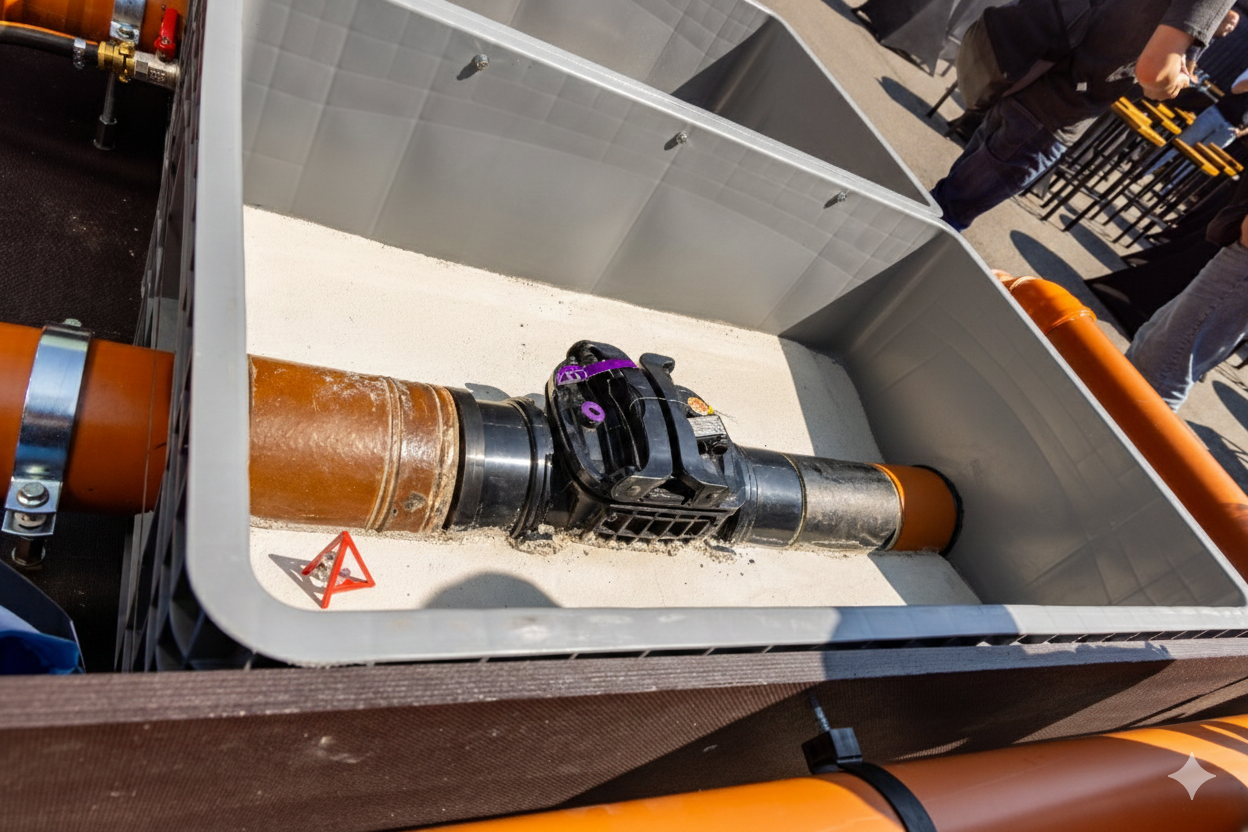
If, after a heavy rain, the water suddenly comes out of the drains in the house, it quickly becomes unpleasant. A backlog in the sewer system is one of the biggest concerns for property owners who have floor drains below the backflow level. But how does this problem actually arise?
In this blog post, you will learn everything about the causes of backlogs and how you can best protect yourself from them.
Backlog explained in a nutshell
- Definition: Backflow occurs when waste water from the sewer is pushed back into the house. This usually happens when there is heavy rain or blockages in the public sewer system.
- Danger zone: All drains (toilets, showers, washing machines) below the backflow level are at risk.
- Protection systems: Depending on requirements, backflow flaps (for faecal-free water), lifting systems (for toilets) and/or pressure-tight cleaning openings protect.
- Insurance coverage: Insurance companies in Austria often only provide insurance if professional insurance is available and regular maintenance can be proven.
- “Certified backflow protection”: The channel offers you a well-thought-out complete system. This service ranges from inspecting your property to professional installation and regular maintenance of backflow protection.
What is a backlog?
Backflow is the state in which waste water from the public sewer network can no longer flow properly and is instead pushed back into the house connection pipes. The water rises in the pipes and exits at the lowest point in the building without suitable protection. Floor drains, showers or toilets in cellars and basement rooms are particularly frequently affected.
The decisive measure for assessing the risk is backflow. It marks the highest possible water level up to which waste water can rise in backflow before it overflows in public areas. In Austria, this level is usually at the top of the road at the junction with the public canal, often about 15 centimeters above. All drainage points below this level are considered to be at risk of backflow.
When does backwater become a risk?
There is always a risk when drainage points are below the backflow level and no suitable protective measures are in place. When the sewer is overloaded, the normal drainage path reverses and the waste water pushes unhindered back into the building through these openings. The consequences can be significant damage to the building fabric, equipment, electrical installations and heating technology.
Why deeper outflows are critical
Drainage points are all openings in the house through which waste water normally flows into the sewer system. If these are lower than the backflow level (upper edge of the road), this path is simply reversed in the event of heavy rain without safety.
- Typical examples of vulnerable drain points: This includes toilets, showers, washing machine connections or floor drains in the garage and basement.
- Risk of penetration: These deeper openings in the pipe system are critical because, without protective measures, waste water can penetrate the house unhindered in the event of a backflow there.
- The principle of communicating vessels (pipe): Since water always tries to reach the same water level, the waste water in the house rises as high as in the sewer on the street.
Assess backflow levels yourself
To determine whether your rooms are at risk, you can use simple features as a guide:
- Road level as a guideline: Are your basement windows or garage driveways below the level of the sidewalk in front of your house? Then your drains are very likely to be below the backflow level.
- Professional audit: However, an expert investigation is required for a reliable assessment, as the backflow level can be significantly higher than the road directly in front of the house, especially on slopes.
Expert check by the derKanal team
We identify all critical points above and below the backflow level for you. Since each of these points represents an entry point for faecal water, seamless recording is the basis for our “Certified backflow protection”.
Why is there a backlog?
There are various reasons why the sewer system is reaching its capacity limits and the water chooses the path of least resistance — i.e. back into your house:
- Heavy rain events: That is the most common cause. If enormous quantities of water flow into the sewer system in a very short time, the public network cannot immediately remove these quantities. The canal is congested and builds up to the top of the road. This process cannot be changed even by the public network operator, since the sewer networks cannot be expanded quantitatively only at very high cost.
- Blockages in the main sewer: Obstacles in the public pipeline network, such as root growth or foreign bodies, can impede runoff and cause local backflow.
- Burst pipe or pump failure: A technical defect in the urban pipeline network or the failure of a public lifting system also means that the waste water can no longer flow off.
- Cleaning work: When dishwasher is used in the sewer, water is flushed in at high pressure. Without an appropriate fuse, this pressure can be sufficient to push water up through your pipes.
Which technical solutions protect against backlogs?
Technically correct backflow protection always starts with tight pipes. In addition, depending on local requirements, there may be various mechanical or electrical barriers, or a combination of these, which prevent the backflow of waste water. For these systems to function reliably in an emergency, proper and regular maintenance is crucial.
Mechanical backflow damper
Mechanical backflow valves, also known as backflow flaps, work with self-closing flaps, which automatically close when water returns. They are suitable for subordinate drainage points without faeces, such as in laundry rooms or cellars with low use. A sufficient natural slope towards the canal is a prerequisite. These systems must be installed correctly and checked regularly, ideally monthly.
Electrically controlled backflow valve
Electrically controlled backflow stops monitor the water level in the sewer. During normal operation, the flaps are open; when there is an imminent backflow, they close by motor. Some of these systems are combined with a pump so that restricted drainage remains possible during a backflow.
sewage lifting plant
A sewage lifting system actively pumps the waste water over a loop that is above the backflow level, thus providing physically reliable protection against penetrating sewer water. It is absolutely necessary when toilets are below the backflow level or there is no natural slope towards the sewer. In contrast to the backflow flap, it allows unrestricted use of the sanitary facilities even during a backflow event. Regular maintenance of electrical components is crucial for the long-term operational safety of these active systems.
Pressure-tight plaster openings
Pressure-tight cleaning openings (cleaning seals) ensure in the best possible way that no waste water escapes from the maintenance openings of the pipes in the event of a backlog. A backflow valve alone is often only a partial solution if these weak points in the pipe system are not massively closed. Our”Certified backflow protection“takes this into account and makes the entire system pressure-tight so that the water stays in the pipe in an emergency. As part of regular maintenance, we specifically test the seals in these openings for their load capacity.
Why is backflow protection maintenance important?
Backflow protection can consist of mechanical and/or electrical components that only function reliably through regular maintenance in an emergency. Dirt, deposits or brittle seals can mean that barriers no longer close completely.
Professional maintenance protects you in two ways:
- Functional guarantee: We ensure that flaps move freely and that pumps start up immediately.
- Legal protection: Many insurance companies only pay for backflow damage if regular maintenance by a specialist company can be proven.
- Retention of value: Professional maintenance significantly extends the life of your system, which avoids expensive new purchases.
Backlog checklist
Effective protection against flooding starts with the correct installation and regular inspection of the entire system. Review your property based on these critical points:
1. Do you know your backflow level?
The backflow level is the decisive measure of your safety. It is usually 15 centimeters above the nearest manhole cover on the street. All outflows below this level are directly threatened by heavy rain.
2. Pressure-tight plaster cover
Cleaning openings are often the underestimated weak point.
- Tightness check: Are the lids securely closed? Only absolutely pressure-tight seals prevent water from leaking out in the cellar in the event of backlog.
- Material testing: Seals become brittle and cracked over time. They must be maintained or replaced regularly to remain elastic.
3. Correct protection depending on the type of drain
Not every fuse is suitable for every drain.
- Toilet safety: WCs below street level must be equipped with a Faecal lifting plant be secured. Conventional flaps are not suitable for waste pipes, as toilet paper and debris can block the hinges.
- Auxiliary lines: Backflow flaps may only be installed in auxiliary pipes (e.g. sinks or showers without faeces). These must remain mechanically locked and should only be opened during use.
4. Separation of pipeline routes
A modern system separates the various waterways to avoid homemade flooding:
- Rain water vs. dirty water: Gutters and balcony drains should be routed in separate fall pipes and ideally only be brought together outside the building. If the pipes in the house are shared, rainwater can otherwise flood higher rooms.
- Free slope: Drains from the upper floors (above the backflow level) must always drain directly into the sewer on a free slope. They must not be passed over a pump so that they function safely even in the event of a power failure.
5. Ventilation via roof
This point is not absolutely necessary, but it is definitely recommended:
- function: Continuing the sewage downline with a constant diameter up to the roof ensures adequate ventilation.
- advantage: This prevents the odour traps (siphons) from being emptied and enables the safe discharge of digester gases into the open air.
FAQ
What is the backflow level?
The backflow level marks the highest possible point up to which backflowing waste water in a property can rise before overflows on public property occur. In Austria, it usually corresponds to the top of the road at the connection to the public sewer network.
All drainage points, such as toilets, showers or floor drains, that are located below this level are directly at risk of backlogs. If your drains are above this level, even if the sewer is overloaded, the water usually flows off without entering the house.
What is the difference between a backflow valve and a lift system?
A backflow flap prevents the backflow of waste water mechanically or electrically and is only suitable for drainage points without toilets. A lifting system actively pumps the waste water across the backflow level and is always necessary when toilets are below this level or there is no natural slope.
Does insurance pay for backflow damage in Austria?
In Austria, backflow damage is usually only covered if this has been explicitly agreed as an additional component (often under “Advanced elementary risks”) in home or household insurance. In addition, insurance companies often only pay if the backflow protection has been professionally installed and has been proven to be regularly serviced.
- Due diligence: Insurers often require that discharge points below the backflow level are protected in accordance with the state of the art.
- Maintenance certificate: If there is no proof of annual maintenance by a specialist company, the insurance company may reduce or completely reject the payment due to gross negligence.
- No standard coverage: In classic basic insurance against tap water damage, damage due to backflow from the public sewer is often not automatically included.
Is a backflow flap alone sufficient as protection?
Not in many cases. Leaky plaster openings or old pipe connections can still serve as exit points. Effective backflow protection must therefore ensure that the entire pipe system is pressure-tight.
How often does a backflow protection device have to be serviced?
Mechanical backflow closures should be regularly checked and serviced by a specialist company at least once a year. Lifts and electrical systems also require annual maintenance. This is often a prerequisite for insurance coverage.
What happens if water is used during a backlog?
In the case of a backflow valve, water must not be introduced during a backflow, as it may otherwise escape into the building. A lifting system, on the other hand, enables normal use of the sanitary facilities, as the waste water is actively pumped out.
Who is liable for backflow damage — municipality or owner?
As a rule, the responsibility lies with the owner of the property. Backlog in the event of heavy rain is considered an operationally related event in the sewer network. Without appropriate backflow insurance, there is usually no claim for compensation from the municipality.
Conclusion
Backlog from the sewer system is a serious risk for real estate, particularly in the event of increasing heavy rain events. The position of the drainage points in relation to the backflow level is decisive. Mechanical or electrical backflow seals, sewage lifting systems and pressure-tight plaster openings, together with a tight sewer system, form the basis for effective protection. Regular maintenance is essential — technically, legally and to maintain insurance coverage.
This blog post summarizes the main protective measures against backlogs for real estate in Austria. He explains the function of the backflow level, distinguishes between backflow valves and lifting systems, and emphasizes the importance of pressure-tight cleaning openings. A particular focus is on regular maintenance, which is decisive for maintaining insurance coverage in Austria.