
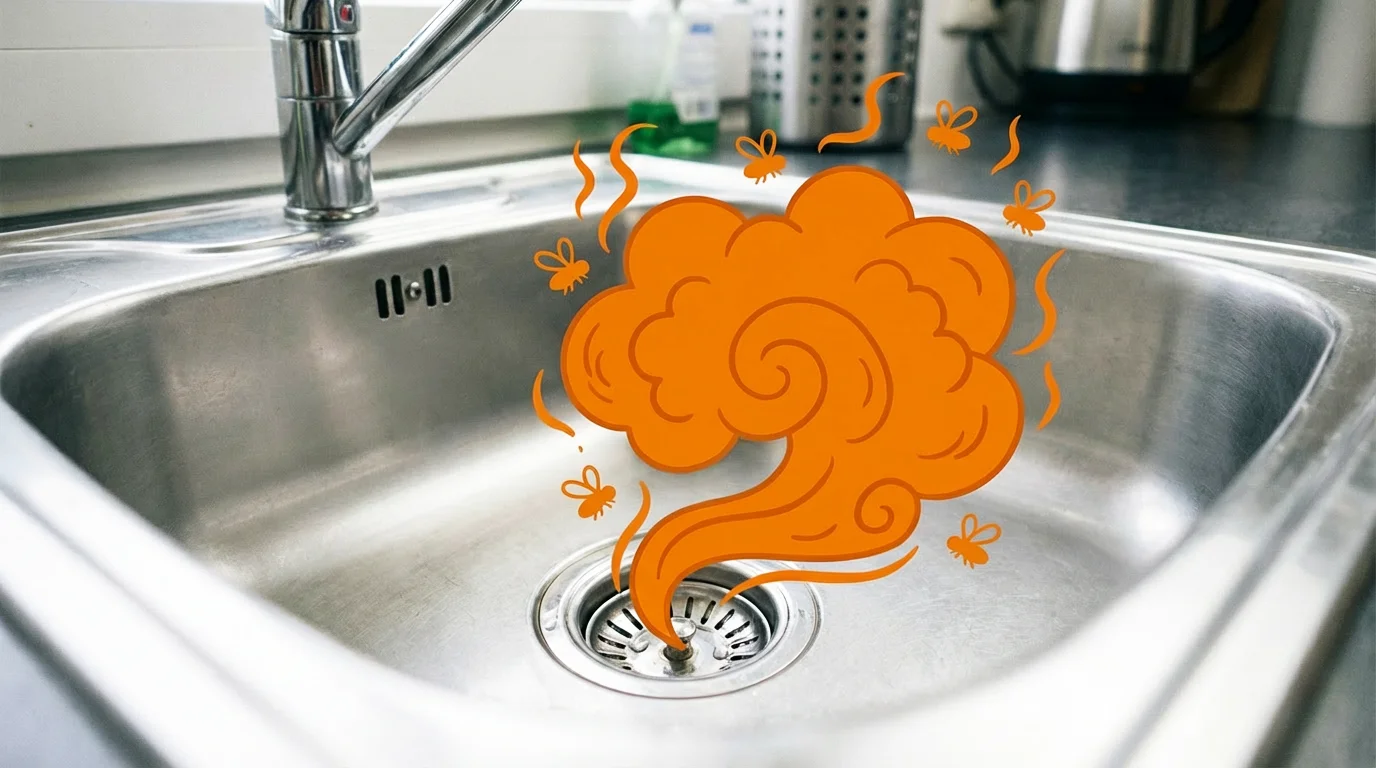
Drain stinks? Causes, Home Remedies & Professional Tips for Kitchen and Bathroom
A smelly drain is a nuisance that you want to fix as soon as possible. We show the 4 most common causes and which home remedies really help and where the limits of DIY cleaning lie. Before you call a professional, you can often remedy the situation yourself with simple, environmentally friendly home remedies.
Drain stinks explained in a nutshell
- Causes: The main causes of smelly runoff are organic residues and blockages, emptied siphons, defective vents or faults in the pipe seal.
- Emergency aid: If there is a smelly drain in the kitchen and bathroom, you can try baking soda, vinegar, and hot water first.
- Mechanical solution: If there is persistent deposits (e.g. due to hair), mechanical cleaning (siphon cleaning, suction cup or spiral) is necessary.
- Precaution: The best precaution is to use sieve inserts, rinse regularly with hot water and dispose of grease properly.
- Boundary: If the stench does not go away after the home remedy method and a mechanical cleaning attempt, call the professionals from The channel.
Main causes of smelly runoff
A smelly drain is not only annoying, but it is a clear signal that something is wrong in the pipe system. The cause of the stench is often not where you think it is. In order to solve the problem permanently, you have to know exactly the origin of the smell.
1. Organic Residues & Blockages
Organic debris and blockages are the most common cause of smelly runoff. Hair, soap residue, oils and fats from the kitchen form a layer in the siphon or further down in the pipe, on which bacteria settle. These bacteria break down the organic residues and release foul-smelling odors that rise through the runoff.
2. Empty siphon (odor trap)
An empty siphon can cause unpleasant odors from the drain. The siphon (the curved piece of pipe under the sink) usually holds a small amount of water as a barrier, called an odor trap. If this seal is empty (because the water evaporates during vacation or a negative pressure has sucked it out), the bad smell can rise unhindered from the sewer system in the bathroom or kitchen.
3. Defective ventilation of the sewage pipe
A drainage system needs a functioning vent. If this vent (usually a pipe that leads to the roof) does not work correctly, this can also lead to smelly runoff. If the vent pipe is clogged or defective, there are severe pressure differences in the system during flushing. This vacuum can suck the water out of the siphon, causing the odor trap to break and make it constantly smell like a sewer.
4. Failure in the pipe seal
Failures in the seal are another cause of bad odors from the drain. Old, poorly installed, or improperly repaired drains may become porous or connectors (sockets) may leak. These small gaps allow duct air to escape into the room even if the odor trap is still intact.
What helps against runoff odor?
Before you call a professional, you can often remedy the situation yourself with simple, environmentally friendly home remedies. In contrast to aggressive chemical cleaners, these solutions work specifically against grease and soap residues without damaging your pipes.
Home remedy for smelly runoff in the kitchen
The cause of stench in the kitchen is usually grease and food waste. This requires targeted treatment. Baking soda and vinegar have a fat-dissolving effect: Put four tablespoons of baking soda (or baking powder) down the drain and pour half a cup of vinegar afterwards. Let the mixture sit for at least 30 minutes. Then rinse with enough hot water to completely rinse out the dissolved residues.
Alternatively, you can use washing soda or salt to neutralize odors.
- Salt application: Use two tablespoons of salt. Let the mixture work for at least 30 minutes (or even overnight) and then rinse with cold water.
- Soda application: A treatment time of at least 30 minutes is also recommended here. Then rinse off with enough hot water.
If these home remedies do not produce the desired results, manually cleaning the siphon is the next and most effective measure.
The procedure for a smelly kitchen drain is basically the same as for a DIY drain cleaning for mild constipation.
Combating smelly drain in the bathroom
Home remedy: For soap residue and slight stench
Hair is the main cause in bath drains, but home remedies help against slight odors caused by soap residue. Try the baking soda and vinegar method first to neutralize soap deposits. To do this, put baking soda (or baking powder) down the drain and pour vinegar afterwards. Allow the mixture to soak for at least 30 minutes and then rinse with enough hot water.
Mechanical methods: When hair is the cause
When the stench returns after using home remedies, the cause is almost always severe hair congestion. In this case, mechanical methods are required to remove the stench and prevent it.
- Plunger/suction cup: The suction cup is the simplest first choice for bath drains. Use the pressure created to release superficial hair buildup.
- Drain coil: Use the drain coil to specifically pull hair balls out of deeper areas of the pipe. Note that this method requires practice so as not to damage the pipe.
- Clean the siphon: If the problem is persistent, get rid of the accumulations for good by manually dismantling the siphon (the bent pipe). Attention: This disassembly requires care in order to then seal everything tight again.
What not to do if there is a stench coming from the drain
1. Chemical pipe cleaners (granulate or liquid)
Chemical drain cleaners are highly aggressive. They attack the material of your pipes, particularly older seals, and can be permanently stuck in the siphon. They also heavily pollute the environment and pose a high risk to your skin and respiratory tract. Instead, use home remedies such as baking soda or vinegar.
2. Improper, sharp tools
Never use unsuitable, sharp objects such as wire hangers or knitting needles. These can scratch or puncture the pipes and seals in the siphon area. This can lead to leaks, which require an expensive professional repair. It is better to use a suction cup or a special cleaning coil.
When is there a deeper problem?
If home remedies and manual siphon cleaning do not solve the odour problem, the cause lies deeper in the pipe system and requires professional analysis.
Have you cleaned the siphon and used the home remedies but the smell remains?
The clear signs of a deeper problem:
- Persistent stench: The smell does not disappear even after thorough siphon cleaning.
- Bubble: You hear a distinct bubbling or gurgling in the drain.
- Slow water drainage: The water drains only very slowly or builds up regularly.
The cause is then deeper in the base line or there is a malfunction in the ventilation system. Constant bubbling or very slow water drainage also indicate a massive blockage.
We are There for you 24/7: Contact us for a professional Drain, pipe or sewer cleaning.
Precautionary measures against odors and blockages in the drain
Regular, simple habits are the best protection against odors and congestion. Focus on sieve inserts and the correct disposal of fats and oils.
The most important tips for permanent drain hygiene:
- Use sieve inserts: Use sieve inserts to catch hair and larger food scraps. That is the simplest and most effective first measure.
- Hot rinse regularly: Rinse the drain weekly with hot water to remove grease and soap deposits before they become a problem.
- Dispose of fat correctly: Always dispose of fats and oils from the kitchen in residual waste or in containers provided for this purpose, never in the drain.
- Keep siphon moist: Use rarely used drains (e.g. in the cellar or guest toilet) regularly to keep the odor trap moist.
- Check venting: If odors persist despite cleaning and regular flushing, have your sewage system vents checked.
Conclusion
In this blog post, we have shown how to effectively counter odors and slight blockages in the drain. The four main causes of stench were explained, from an empty siphon to defective ventilation. Home remedies such as baking soda and vinegar are an effective immediate aid, but for persistent problems, mechanical cleaning of the siphon is the next step. In particular, it was clearly shown which methods you must avoid in order to prevent expensive damage. Regular prevention through proper fat disposal is the best protection. Contact us if the problem is deeper.
In short: This blog post provides valuable information to quickly remedy the cause of odour and prevent it in the long term.
Common questions about “Runoff stinks”
What is the fastest home remedy for acute stench?
The mixture of four tablespoons of baking soda and a half cup of vinegar is the best immediate aid. It neutralizes odors and removes slight deposits. Rinse off after 30 minutes with hot water.
Why does the drain smell even if it is not clogged?
The smell usually comes from an empty siphon (odor trap). When the water evaporates, sewer air rises. Defective ventilation of the sewage system can also be the cause.
Should I use chemical pipe cleaners?
No, you should avoid that at all costs. Chemical cleaners attack pipe seals, are harmful to the environment and can cause expensive damage if used improperly.
When is it time to call the professional?
Call the professionals from DerKanal if the stench does not disappear after cleaning the siphon manually. This indicates an underlying problem in the base line or a faulty ventilation system.