
A broken pipe, cracks or roots growing into your sewer? For many people, this immediately brings to mind a large construction site and an excavator in the garden. But it doesn’t have to be that way. The modern alternative is CIPP lining – a “pipe-in-pipe” system that usually requires no excavation at all. We explain how this trenchless method works.
CIPP lining: the key facts at a glance
- CIPP (cured-in-place pipe) lining is a trenchless rehabilitation method (“pipe in pipe”).
- A flexible hose (the “liner”) is impregnated with resin and inserted into the defective pipe.
- The liner cures and forms a new, watertight and structurally self-supporting pipe.
- The process: 1. Cleaning & CCTV inspection ➔ 2. Liner installation ➔ 3. Curing ➔ 4. Leak testing.
- Pay attention to the material: DerKanal.at uses only ECO resin, which is safe for health and the environment and free of harmful SVHC substances.
- CIPP lining is a “close-fit” method, which means there is almost no loss of cross-section.
- Because the liner reduces the roughness of the pipe wall, the flow capacity is often even higher than before!
How does CIPP lining work? Explained step by step
The “pipe-in-pipe” method sounds complex, but it follows a clear and proven process. We break it down for you into five simple steps:
1. Preparation: cleaning & CCTV inspection
Every successful rehabilitation starts with a precise analysis. First, the defective pipe is thoroughly cleaned to remove all deposits. We then guide a special CCTV sewer camera through the pipe. This inspection shows us the exact damage, the route of the pipe and its exact dimensions – the basis for all further steps.
2. Preparation of the liner: the “impregnated sock”
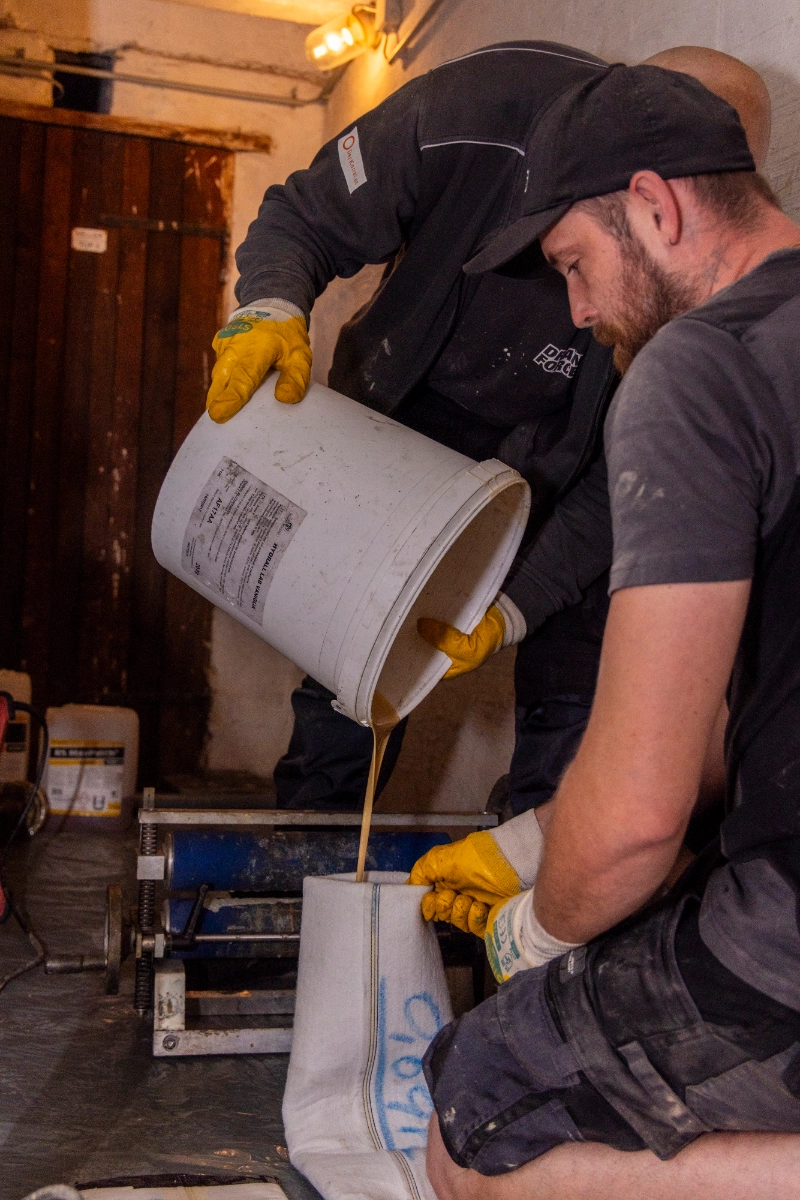
Based on the analysis, the liner is prepared. It is a flexible fabric hose (often made of needle felt or glass fiber) that is cut exactly to the length and diameter of your pipe. This “sock” is then impregnated with a special resin under controlled conditions – in our case, ECO resin.
3. Installation: the liner goes into the pipe
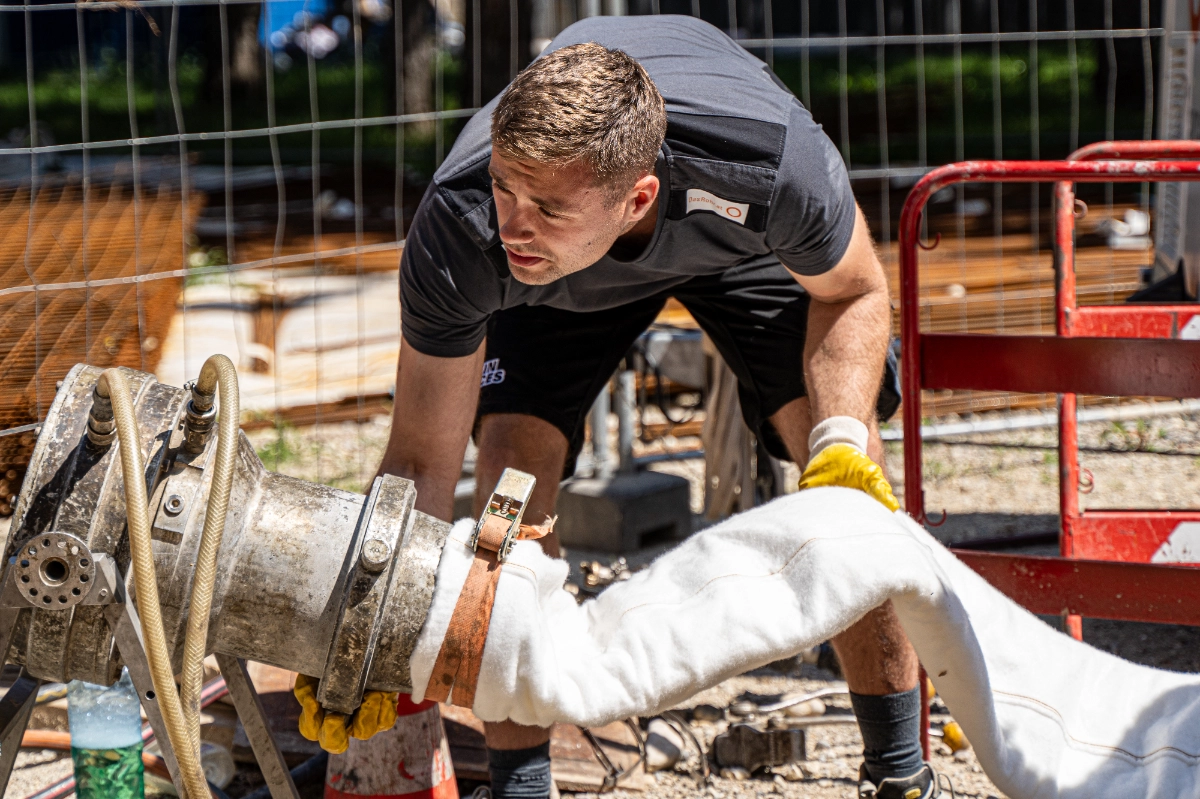
The resin-impregnated hose is inserted into the old pipe, usually through an existing manhole or a small access point. Using air or water pressure, the liner is “inverted” (turned inside out) so that it fits snugly against the old pipe wall without any air bubbles.
4. Curing: the new pipe is created
As soon as the liner is perfectly in place, curing begins. Depending on the resin system and local conditions, the resin is cured in a controlled manner – either with hot water, steam or special UV light. The resin reacts and turns into an extremely hard, watertight and durable plastic: a completely new, structurally self-supporting pipe has been created inside the old one.
5. Completion: inspection & leak testing
After curing, the result is checked. A final CCTV inspection covers the entire rehabilitated section. If there are lateral connections along the section, they are reopened with millimeter precision using a remote-controlled robotic cutter. A final leak test in accordance with ÖNORM documents the success of the work and guarantees you a watertight system.
CIPP lining vs. spot repair: what’s the difference?
These two trenchless methods are often confused, yet they are two different solutions for different problems.
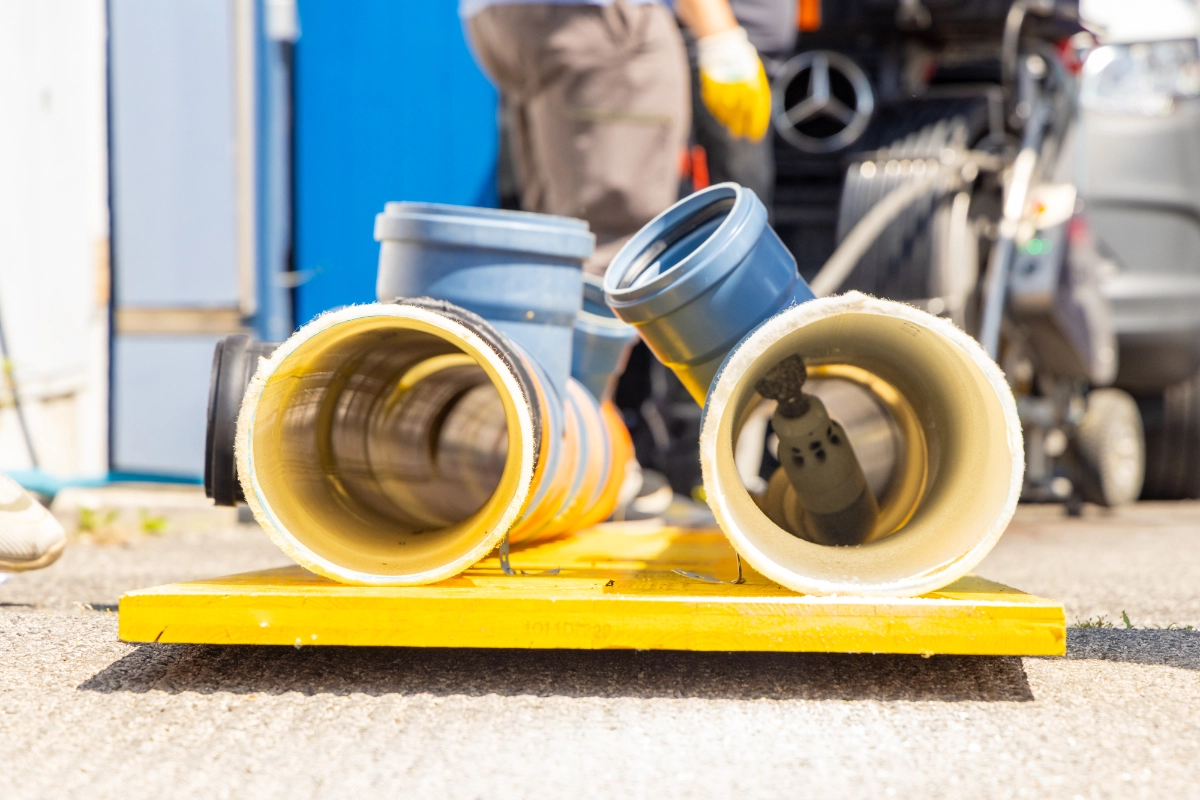
- CIPP lining (full-length rehabilitation): Here, a complete section of pipe (e.g. from manhole to manhole) is rehabilitated. CIPP lining is a renewal: it creates a completely new, structurally self-supporting “pipe in pipe”. It is the right choice when a pipe is porous throughout or has several defects.
- Spot repair (e.g. inner sleeve): Here, only a single, local defect is repaired, such as an individual crack, hole or leak. It is a repair, not a complete renewal of the section.
Which method is right for you is always decided after a thorough CCTV inspection. As we also describe on our service page, a targeted spot repair is often the ideal preparation for subsequent full-length CIPP lining.
Which resin is best for CIPP lining?
The resin is the decisive factor for the durability of the rehabilitation and for protecting health and the environment. The best resin is solvent-free and contains no harmful SVHC substances, so that groundwater is protected.
The facts about standard resins
- Many commercially available epoxy resins contain so-called SVHC substances (substances of very high concern).
- These can trigger allergies and are suspected of being carcinogenic or mutagenic.
- If no protective film is used during rehabilitation, these pollutants (e.g. bisphenol A or nonylphenol) can enter the soil and therefore the groundwater.
That’s why we use ECO resin
Modern, solvent-free ECO resins are guaranteed free of all harmful SVHC substances. This decisive material advantage not only protects the health of our staff during installation but also ensures that no pollutants can enter the groundwater. For exactly this reason – and as a clear commitment to quality and responsibility – we at DerKanal.at use only high-quality ECO resin for our CIPP lining.
Benefits of CIPP lining
CIPP lining is a trenchless, fast and cost-effective method. It rehabilitates pipes from the inside without digging up your garden and offers a long-lasting solution with a service life of up to 50 years.
The benefits of CIPP lining at a glance:
- No excavation: This is the biggest advantage. Your garden, paved paths or driveway remain completely untouched. No excavator, no noise and no dirt.
- Fast & quiet: Since no heavy machinery is needed for excavation, the rehabilitation is often completed within a single day – with minimal noise.
- Cost-effective: Modern technology doesn’t have to be expensive – quite the opposite. Overall, CIPP lining is almost always cheaper than the open-cut method. You save on the most expensive items: excavation, construction waste and, above all, the time-consuming restoration of your garden or paved areas.
- Extremely durable: A professionally installed liner is a sustainable solution. The new pipe within the pipe is extremely resistant to cracks and root ingress and has a technical service life of up to 50 years.
Disadvantages and limits of CIPP lining
CIPP lining is not the right choice if the pipe has already collapsed or has a severe reverse gradient (a “sag”). The method repairs a pipe from the inside but does not correct its position in the ground.
The limits of CIPP lining in detail:
- No correction of the gradient: A liner always follows the course of the old pipe. If there is a structural problem (e.g. a “sag” or a severe reverse gradient), the liner cannot fix it.
- Severe damage or collapse: If the pipe has already collapsed completely or is so badly deformed that a liner can no longer be inserted, trenchless rehabilitation is no longer possible.
As a full-service provider and specialist, we always check these points first with a CCTV inspection. If CIPP lining does not make technical sense, we will advise you transparently on the alternatives, such as horizontal drilling or the open-cut method.
Conclusion
In this blog post, we have shown how modern CIPP lining works and how it can rehabilitate defective pipes completely without trenches. We explained the process step by step, from the CCTV inspection to curing, and showed both its clear advantages (no excavation, cost-effective, durable) and its limits (e.g. a reverse gradient). Above all, we have explained the decisive but often invisible difference in material quality: standard resins versus the ECO resin that is safe for health and the environment, which we at DerKanal.at use exclusively.
In short: This blog post provides valuable information to help you understand CIPP lining as the modern alternative to the open-cut method.
Based on a professional CCTV inspection, we will be happy to give you honest advice on whether this method is the best and most economical solution for your property.